A shared fiber test lead can be present in the tool case and still be unavailable for the next measurement. The previous technician may have reported damage, changed a connector adapter or used the lead in a setup whose verification record has not followed it back to the stores desk.
Manage shared fiber test leads with three linked records: checkout, return condition and release for the next task. The log establishes custody and verification status. It does not replace inspection, the instrument procedure or a valid reference setup. This guide focuses on that handover between people and teams, rather than troubleshooting a particular failed measurement.
Define the lead’s job before putting it in the shared pool
A patch cord, a qualified reference test cable and an OTDR launch lead are not interchangeable descriptions. Record the intended role and the conditions under which each item was accepted for that role. If one physical assembly is suitable for more than one task, retain the relevant qualification and setup information for each use.
The FOA reference-cable guidance explains why test-cable quality and connector condition matter to loss testing. It provides the technical reason for managing the lead as part of the measurement setup. It does not prescribe a universal stores form, a fixed replacement interval or approval of an ordinary patch cord as a reference cable.
For a shared pool, assign one durable asset identifier to each lead. Keep its supplier configuration and any qualification record linked to that identifier. Cable color and connector appearance can help recognition, but neither should be the primary identity key for the log.
Record what leaves stores, including the associated parts
The checkout record should make it possible to reconstruct who took which lead for which job. Include the date, borrower, site or work order, lead identifier, stated role and the current release record. Record any associated adapter or protective case when its identity matters to the measurement setup.
Keep the asset identifier separate from the circuit identifier. The first identifies the reusable tool; the second identifies the installation being measured. If a lead is used on several circuits during a shift, the measurement records should retain the connection to the lead used for each relevant set of results.
| Handover point | Record to retain | Decision it supports |
|---|---|---|
| Checkout | Lead ID, borrower, task and release reference | Whether the available item fits the planned work |
| Change during use | Adapter, lead or setup change and time | Which setup produced each result set |
| Return | Item identity, condition and incidents reported | Whether the lead can proceed to verification |
| Release | Applicable checks, outcome, reviewer and scope | Whether it may be issued for a defined next role |
A missing entry should remain visible as a missing entry. Reconstructing an uncertain history later is different from recording a confirmed handover. Do not fill an earlier checkout with an assumed borrower simply because that person normally uses the kit.
Treat a returned lead as awaiting a decision
Separate physical receipt from permission to reissue. On return, reconcile the item with the checkout and ask whether there was contamination, unusual handling, damage, an unexpected result or a change to the assembly. Record uncertainty as well as confirmed incidents.
Use clearly distinguished storage states, such as ready for the stated role, awaiting verification and held for investigation. The exact labels are a local operating choice. The important point is that a technician should not have to infer readiness from whether the lead has been placed back in its usual pocket.
Follow the applicable safety, inspection and cleaning procedure. Establish the optical safety state before inspection, and record any cleaning or corrective action that changes the returned condition. A protective cap is not a measurement record; see the connector dust-cap handling guide for the separate cleanliness question.
Link release to the procedure and intended use
Use the instrument manufacturer’s instructions and the approved test procedure to determine the required checks. Record the setup and result of those checks, not just a tick labelled tested. The record should make clear what was verified and what remains outside its scope.
For loss testing, a new reference setup and an instrument calibration answer different questions. The calibration versus reference guide explains that distinction. An instrument’s calibration status does not describe the current condition of every lead issued with it.
Likewise, a successful check in one setup does not establish suitability for every connector interface, fiber type, wavelength or method. Define release by role: for example, available for a specified task under a named procedure after its required checks. Avoid a general approved sticker that outlives the evidence supporting it.
If the lead fails a required check or its history raises an unresolved concern, hold it out of the ready pool. Diagnose it using an appropriate method or replace it through the controlled process. Do not repeatedly change the reference until the displayed result looks acceptable and then omit the failed checks from the record.
Match a replacement assembly to the documented role

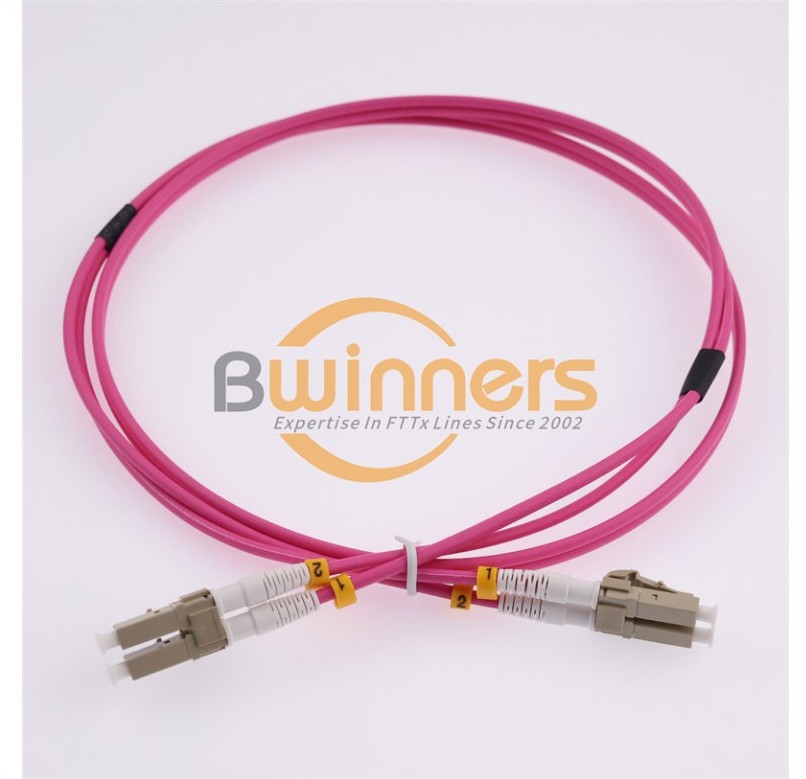
The LC-to-LC duplex OM4 violet patch cord illustrates a real multimode assembly family that may appear in a site’s patching inventory. It can be considered when the required connector interfaces, fiber type and construction match the order. The official product photograph is not evidence that this item is qualified as a reference test cable.
If buying an assembly for a measurement role, obtain confirmation of the role-specific requirements and supporting evidence before admitting it to the shared test-lead pool. Confirm the connector configuration, length, cable construction and the test method’s requirements. Resolve the exact jacket and diameter in the quotation and order documents rather than inferring them from the product photograph or a family-page option.
Keep general service patch cords in a distinguishable inventory state. A useful procurement question is: which evidence will establish that this particular assembly is suitable for the intended setup? A color match or a similar connector housing is not an answer. Where required evidence is unavailable, retain the item for its confirmed service role rather than giving it an unsupported reference-grade designation.
Preserve the relationship between the lead and existing results
If a concern is reported after a lead has already been reissued, use the custody log to identify the work performed since the last relevant verification. Then assess which result sets may need review under the test procedure. Do not automatically declare every earlier result invalid, and do not assume that all earlier results remain valid because one later check passed.
In a hypothetical example, a lead is checked out to Team A, returned with a note about an intermittent result, then moved to Team B’s case before stores reviews the note. The immediate problem is an unresolved release state. Record the transfer, place the item on hold and identify the affected work before deciding whether any measurements need repeating.
The log makes the review possible, but it does not establish when a fault began. Keep that uncertainty explicit. Retain original result files and append any corrected conclusions or repeat-test records instead of silently replacing the original evidence.
Keep the system small enough to use on every handover
A shared spreadsheet or asset system can support this workflow if it preserves item identity, event order and release history. Choose a record that field teams can update at the point of handover. A detailed form that nobody completes is less useful than a short, consistently used record with links to the actual technical evidence.
Start with the minimum fields needed to answer four questions: which item, who had it, what changed and why it was released. Use local risk, usage history, instrument instructions and the approved method to determine the verification regime. No universal day count or mating-cycle limit is proposed here.
For an LC duplex assembly inquiry, send the intended role, connector interfaces, fiber requirement, ordered length and required supporting evidence to [email protected], or contact +86-13615744790. State explicitly whether the order concerns service patching or a measurement application so that the required qualification can be confirmed before purchase.


