Prepare an MPO Cable Requirement Before Quotation
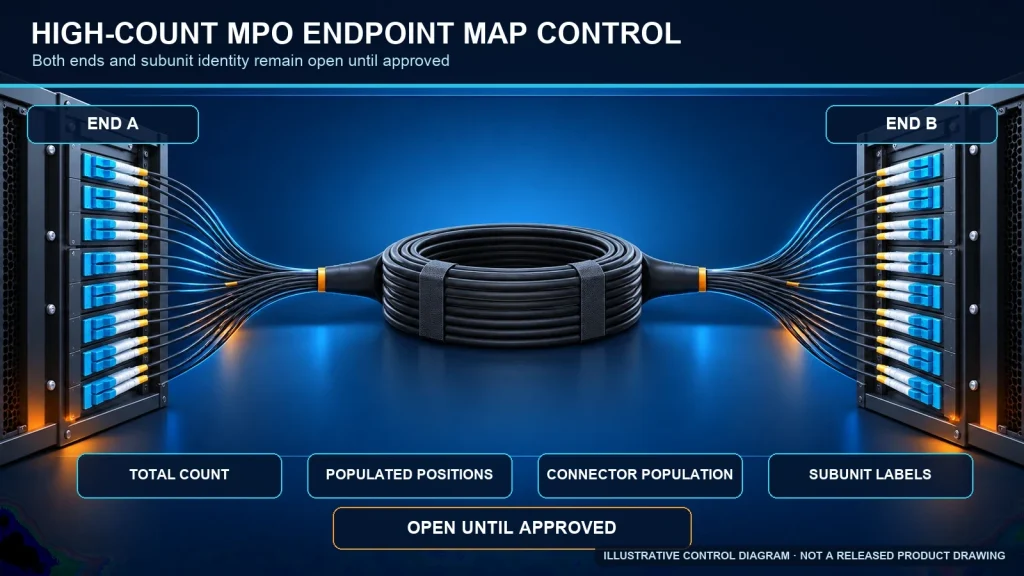
A short cable label is rarely enough to release an MPO assembly for quotation. Start with the link endpoints and record each configuration decision together with the document that supports it. If a field is not yet confirmed, mark it TBC instead of inferring a value.
| Requirement | What to record | Evidence to use | If unknown |
|---|---|---|---|
| Link endpoints | Equipment, panel, cassette, module, or adapter at End A and End B | Approved equipment documentation or project drawing | TBC |
| Architecture | Trunk, harness, breakout, module-based, or other approved link design | Network design or link drawing | TBC |
| Fiber configuration | Fiber type, total fiber count, and active positions | Approved BOM, device documentation, or drawing | TBC |
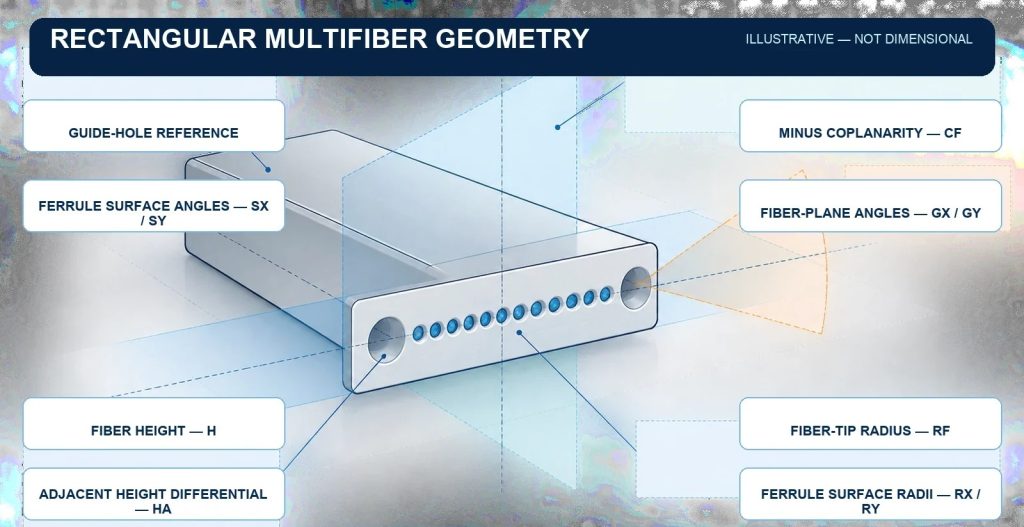
| End A / End B interface | Connector/interface, pinning, key orientation, and end-face finish for each end | Approved interface drawing or supplier data sheet | TBC |
| Fiber map and polarity | Position-to-position mapping and the required end-to-end behavior | Approved polarity drawing and device documentation | TBC |
| Length | Ordered length and the measurement reference points | Route survey or approved drawing | TBC |
| Route and environment | Path, bend constraints, pulling/installation conditions, and any project-specific construction requirement | Site survey and project specification | TBC |
| Quantity and destination | Required quantity and delivery destination | Purchase request or RFQ | TBC |
| Acceptance evidence | Documents or records required for approval | Project quality plan or purchase specification | TBC |
Use a configuration evidence matrix
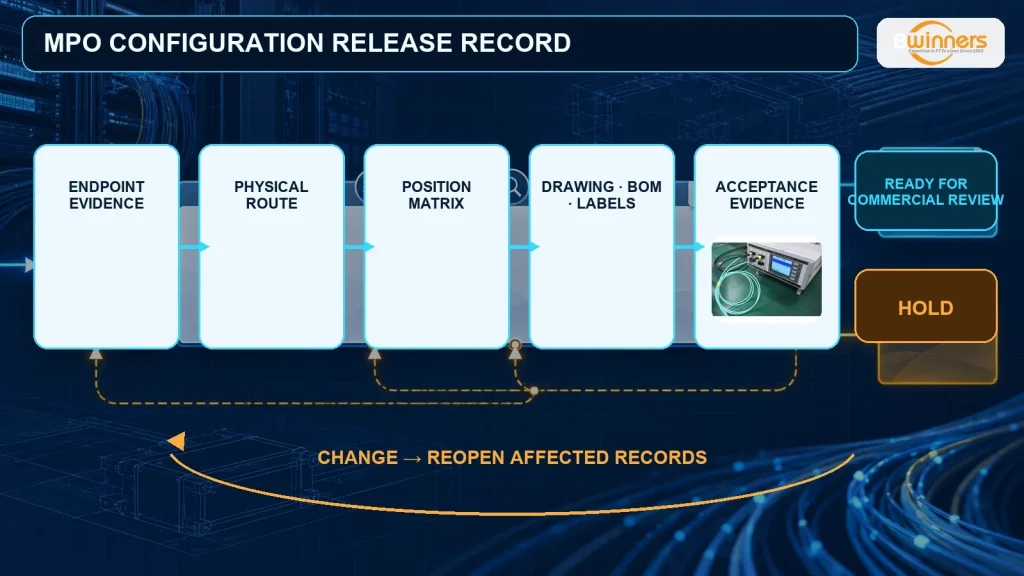
For each requirement, record the selected value, the source document, its revision, the reviewer, and the approval status. This separates confirmed inputs from assumptions and makes conflicting documents visible before quotation or production release.
Check document parity before release
The RFQ, drawing, BOM, device documentation, and approved quotation should describe the same endpoints and configuration. If two documents disagree, stop the release and resolve the difference with the responsible technical owner. Do not choose a value based only on what is commonly used.
Record substitutions and deviations
Any proposed substitution or deviation should identify the affected requirement, the reason, the approving party, and the revised document. A verbal confirmation should be transferred into the controlled project record before release.
Send Your MPO Requirements
Share the two endpoints, architecture if known, length, quantity, destination, and any available drawing or equipment data sheet. Unknown fields can remain TBC so missing inputs can be confirmed before a formal quotation.