
An MMC-to-MPO migration should begin with a small, documented pilot that proves the intended connection path. Approve the two endpoint interfaces, the complete channel map, the installed route, and the acceptance evidence before releasing the production cable order. A harness can bridge connector families in an appropriate design; it cannot resolve an undefined equipment interface.
This guide is for data center project engineers introducing an MMC segment while retaining part of an existing MPO installation. It focuses on pilot acceptance and production release rather than a general connector comparison. The outcome is a review package that purchasing, installation, and operations teams can use without reconstructing the original engineering assumptions.
Our MMC solutions catalog includes jumpers, trunks, and breakout harnesses. MMC and MPO do not mate directly. Any transition requires a specifically configured assembly or system design, with compatibility established at both ends. Product-family availability is a starting point for that discussion, not an approval of a particular link.
Define exactly what the pilot must prove
Start with a bounded statement: “Qualify this assembly configuration between these two documented interfaces, along this route, using these acceptance criteria.” Replace every general term with a drawing reference, equipment identifier, or controlled document before ordering the pilot assembly.
Decide whether the migration changes only a patching segment or also changes the equipment, trunk, adapter panel, and operational procedure. A pilot that changes several elements simultaneously needs a record of all of them. Otherwise, a successful result may be difficult to reproduce when production uses a slightly different arrangement.
Name the approvers before the sample arrives. Engineering should approve the configuration and criteria; installation should confirm that the assembly can be routed and handled as intended; operations should accept identification and maintenance access. Purchasing needs the final approved part definition and the list of changes that require another review.
A pilot should resolve uncertainty. If the required interface documentation is missing, pause that decision and obtain it. Ordering multiple speculative samples is not a substitute for identifying which port the cable must connect to.
Freeze the two endpoint records
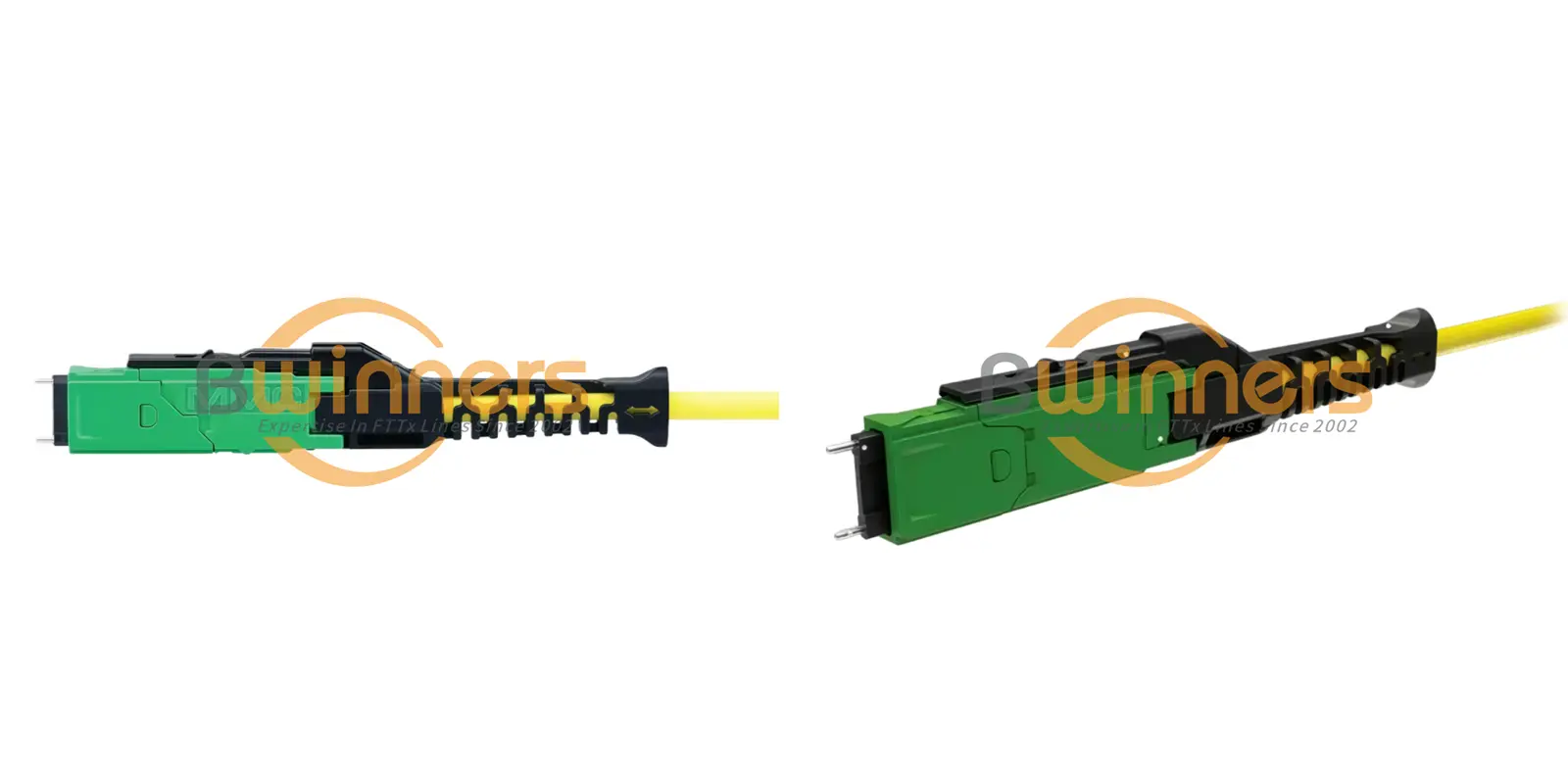
Create one record for the MMC side and another for the MPO side. Include the equipment or panel model, document revision, interface drawing, fiber type, fiber positions used, gender or pin arrangement, polish, and orientation reference. Keep the distinction between an equipment receptacle and an intermediate patch-panel connection explicit.
Do not determine the connector from the aggregate speed alone. Two links described using the same data rate may still have different physical connection requirements. For an existing 800G segment, the 800G DR8 connector guide is useful background for organizing the port review; the selected module’s documentation remains the deciding reference.
Photographs can help identify a physical port, but they should accompany controlled documentation. Record the view direction when using photographs or drawings to discuss fiber positions. A drawing without a clear orientation can be interpreted differently by the equipment team and the cable supplier.
End the endpoint review with a signed or otherwise controlled interface record. If an endpoint remains undecided, label the associated assembly configuration provisional. Do not let a provisional line item enter a production order simply because its length and quantity are already known.
Product reference for the endpoint review
Use the MMC connector and adapter product details to organize the MMC-side interface discussion. The product page lists configurable options; your pilot record must identify the selected configuration and its mating port. Inspect the actual sample against that record before starting the link evaluation.
Review the entire channel map
Ask for a connection table covering the complete path, including every intermediate assembly and panel that participates in the pilot. A polarity label on a single cable does not document the full installed route. The table should let a reviewer trace each required position from the defined start point to the defined destination.
For a breakout assembly, include the branch identifier and the destination associated with each branch. Distinguish unused positions from positions whose assignment is still unknown. These states require different handling: unused positions can be documented intentionally, while unknown positions remain a release blocker.
Use a consistent naming convention across the drawing, cable labels, test report, and installation schedule. If the supplier’s manufacturing identifiers differ from the site’s link identifiers, include a translation table. Do not rely on a technician remembering which naming system was used in an earlier discussion.
Review the map independently of the commercial quotation. A quotation can identify the price and lead time without proving that the channel routing is correct. Keep the drawing revision referenced on the accepted quotation and production order so the commercial and technical records remain connected.
Product reference for the migration harness
The MMC breakout and harness cable product page is the direct starting point for a custom transition inquiry. It lists MMC-to-MPO options that require a configuration drawing to confirm connector quantities, active fibers and channel mapping. Send both endpoint records and the full connection table when requesting that drawing.
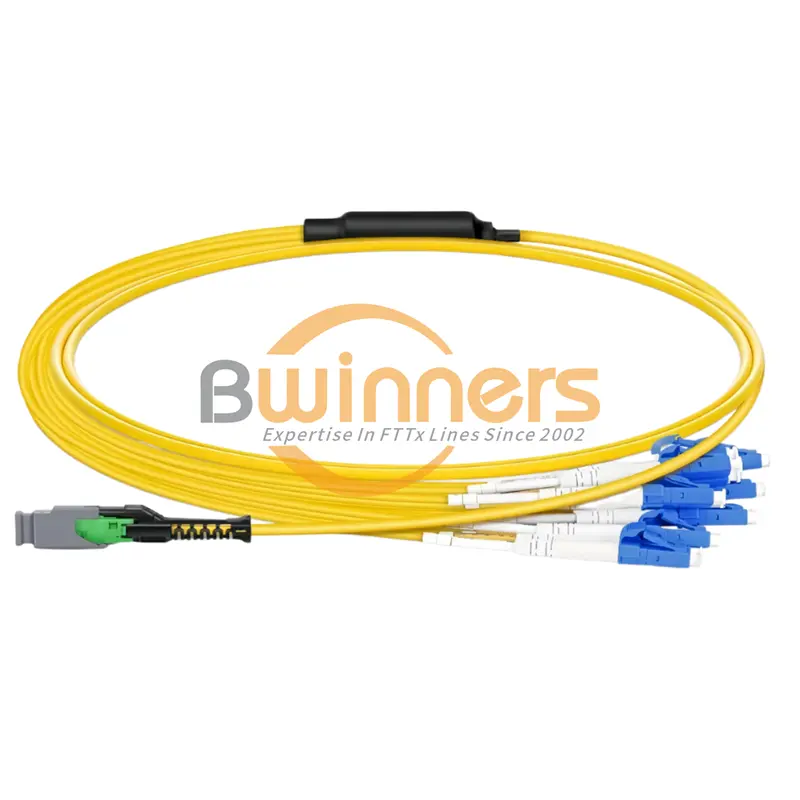
For the MMC-to-MPO pilot, obtain a drawing and sample for the exact requested transition rather than treating the photographed LC variant as interchangeable. Define the far-end MPO interface, fiber use, polarity and any branch dimensions before quotation and sample acceptance.
Check the route in the installed arrangement
Measure the intended path, including the equipment entry, cable management, service access, and any breakout section. Use the assembly supplier’s applicable handling limits when reviewing the route. Do not invent a generic bend-radius number or use a limit from an unrelated cable construction.
Check where the transition body or fan-out will sit. It should not be left in an undefined position that installation crews must improvise around. Confirm that the planned supports and labels remain accessible after neighboring connections are installed.
If higher density is a project objective, assess the actual populated panel arrangement. More connector positions on a drawing do not, by themselves, establish that technicians can identify, access, and service those positions in the rack. Document the configuration used for this assessment, including adjacent equipment and cable routing.
A useful pilot observation is specific: a particular branch cannot reach its assigned port without changing the approved route, or a label becomes unreadable after dressing. Record the condition and revise the drawing or assembly definition. Avoid summarizing these findings as a vague preference for a longer or shorter cable.
Agree on acceptance evidence before shipment
Define which evidence belongs to the assembly and which belongs to the installed link. BWNFiber lists channel-level insertion-loss and return-loss reports among the available documentation for its MMC offering. Request the report format and configuration details for the actual order rather than assuming every project receives the same package.
For assembly acceptance, specify the required identification, channel mapping record, test conditions, limits, and report traceability. For the installed path, agree with the responsible engineering team on the inspection and test procedure appropriate to the equipment and project. Acceptance limits must come from approved requirements, not from this general checklist.
The following matrix can be adapted to the project. It intentionally leaves numerical limits to the responsible specification owner.
| Review item | Evidence to retain | Release condition |
|---|---|---|
| Endpoint fit | Approved interface records and assembly drawing | Both ends match the documented configuration |
| Channel routing | Complete position-to-position map | All required paths are assigned and verified |
| Route and access | Installation record and observed issues | Handling and service requirements are met |
| Assembly performance | Identified test report with conditions and limits | Results meet the approved assembly criteria |
| Installed link | Project acceptance record | The defined installed configuration is accepted |
| Traceability | Part revision, sample identity, labels, and approvals | Production can reproduce the accepted configuration |
Do not convert a missing report into a pass because the link appears to operate. Keep missing evidence separate from failed measurements, then close both before release. That distinction helps the supplier resolve the actual issue without repeating unrelated work.
Run a controlled pilot and record deviations
Use the planned equipment and route whenever possible. If the pilot uses a substitute panel, a different cable length, or another equipment revision, record the deviation before testing. Explain which conclusions remain valid and which require confirmation in the final arrangement.
Record the sequence of work as well as the final result. Note identification issues, route changes, handling difficulties, and any replacement or rework. A pilot that eventually passes can still reveal an installation step that needs clearer instructions before a larger rollout.
When an issue occurs, preserve the configuration information associated with that result. Changing several components at once may restore operation while leaving the original cause unresolved. The responsible engineering team should decide how to isolate the issue and what must be repeated after a change.
Close the pilot with an explicit decision: accept the documented configuration, revise and repeat the affected checks, or reject that configuration for the intended application. Do not describe a partially completed evaluation as production approval. Store the decision beside the evidence so purchasing can see the current state.
Convert the accepted pilot into a production definition
The production order should reference the accepted drawing revision and the configuration that was actually evaluated. Include length definitions, branch assignments, labels, packaging requirements, quantities, and the agreed documentation package. Keep any project-specific instructions attached to the same controlled part record.
Define change triggers. A different endpoint, fiber arrangement, routing pattern, material construction, or acceptance requirement may need engineering review. The project owner should determine the required review scope; a supplier should not be expected to infer it from a marketing product name.
Retain an identified sample or an agreed reference package where the project process requires it. The purpose is to make later comparisons possible, not to imply that visual similarity proves performance. Production documentation and agreed acceptance evidence still matter.
For site delivery, ensure that receiving staff can connect a shipment label to the correct installation schedule and report. A technically correct assembly is difficult to manage if its identity becomes detached from the project records before installation begins.
Prepare a useful request to BWNFiber
Send the two endpoint records, the full channel map, route and length information, quantities, acceptance requirements, and the intended delivery schedule. Identify open decisions explicitly. Ask for a configuration review of the proposed migration segment and a quotation tied to the resulting drawing revision.
Our catalog describes MMC-to-MPO harness options, but the exact construction, documentation, and schedule must be confirmed for your project. Contact [email protected] with the review package. This gives the discussion a concrete starting point and makes unresolved requirements visible before an order is placed.
Pilot-release questions
Can an MMC connector plug directly into an MPO port? No. The migration design must provide the appropriate interfaces, and both ends must be checked against the actual equipment or panel documentation.
Does a successful sample prove every assembly in the family is compatible? No. Approval applies to the evaluated configuration and the scope of its recorded evidence. Changes need the review defined by the project.
What should block production release? Unresolved endpoint information, an incomplete channel map, unaccepted installation deviations, missing required test evidence, or a production definition that differs from the approved pilot.
What is the most useful final deliverable? One controlled package linking the interface records, assembly drawing, route, acceptance results, and purchasing definition. That package turns an MMC-to-MPO migration from a connector discussion into a repeatable deployment decision.
Contact phone: +86-13615744790.


