How to Install LC Fiber Connectors
The LC fiber connector is one of the most common types of optical connectors in use today. They are nearly half the size of an SC connector and are easy to engage and disengage. They are a modern replacement for SC connectors and are compatible with both UPC and APC systems.
LC fiber connectors are half the size of SC connectors
LC fiber connectors have smaller size than SC connectors and are ideal for high-density installations. They can be used for a variety of optical connections, including high-speed 100GbE networking. They are also available in duplex configuration, which allows them to be used for dual-fiber connections.
LC connectors are typically used for high-density business environments, where the density of connections is high. They are also smaller than SC connectors, which makes them a more practical option for small office environments. In addition, they are cheaper. The LC fiber connector is a half-inch square, whereas SC connectors are 0.7″ square.
SC connectors are typically used for datacom and telecom applications, but they can also be used with fiber optic extenders. The SC connector uses a push-pull latch and a spring-loaded ceramic ferrule. This connector is about half the size of the LC connector, which makes it more suitable for small equipment.
They are convenient to engage and disengage
LC fiber connectors are one of the most common types of fiber optic connectors. This small connector is designed for applications that require high fiber density. It is approximately half the size of SC connectors and has a small, compact form factor. These connectors are typically equipped with a push-pull engagement mechanism that is convenient to engage and disengage. LC fiber connectors are available in duplex and simplex versions and are compatible with both single-mode and multimode fiber optic cables.
LC fiber connectors are easy to engage and disengage and are suitable for single mode and multimode applications. They have an RJ45-style jack for easy engagement and disengagement. They are also compact and use one cable instead of two. The LC connector is patented, and has many advantages over conventional fiber optic connectors. The duplex LC connector offers low insertion loss, high precision, and mechanical stability. The LC connector also minimizes back reflection and misalignment of fibers.
They are a modern replacement for SC connectors
SC connectors, which were developed in the 1980s, are a popular type of connector in fiber optic communications. They feature a square plastic housing with a 2.5mm ferrule and a push-pull latching mechanism. They are available in simplex, duplex, and single-mode configurations.
Unlike the SC connector, the LC connector uses a latch instead of a locking tab. This allows for quick and easy insertion. It is also popular in high-density patch applications. It is less expensive and has a smaller footprint than its predecessor, the SC connector.
The FC connector is rapidly losing popularity and LC fiber connectors are becoming more common. Both types of connectors provide a secure locking connection, high-quality signal, and accurate optical wave. MTRJ connectors are a good choice for duplex multimode connections. They have small, compact sizes, and look like a conventional RJ45 connector. NTT also produces a connector known as the Multi-Termination Unibody Connector (MU). It has a ferrule diameter of 1.25mm. Compared to SC, MU has a smaller footprint, but is still an excellent option for dense applications.
They are available in UPC and APC
There are two basic types of LC fiber connectors: APC and UPC. UPC connectors are cheaper and provide similar performance to APC. However, APC connectors are more preferred for sensitive applications. Today, both UPC and APC connectors are widely used in fiber networks.
APC connectors are more reliable than UPC connectors for high precision optical fiber signaling. They are widely used in radio frequency and distribution antenna systems, but are not restricted to them. UPC connectors are suitable for low-end optical passive applications. Choosing the right connector for your application should be based on cost and ease of use.
After installation, verify the link with fiber optic test tools — a power meter check catches bad terminations before they reach the rack.
UPC connectors have slightly curved end faces to facilitate alignment. This reduces insertion loss and enables them to mate two strands of fiber. Although they look flat, the connector end face is slightly curved to reduce light reflection. Light will then travel back along the fiber optic cable toward the light source.
They are available in duplex assemblies
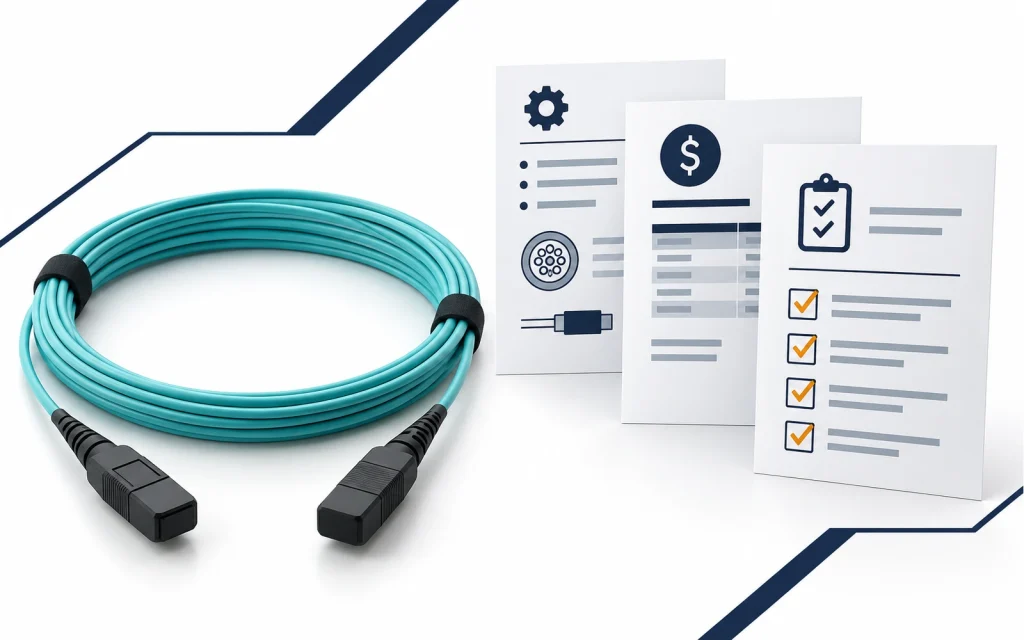
The LC fiber connector is designed to be rugged and reliable. Its unique latching mechanism prevents snagging or misconnection. The connectors also have an audible click to maintain the correct polarity. They are also available in duplex assemblies, built to order as LC fiber cable assemblies. These connectors are often used in rack-mounted equipment.
The LC ST Duplex Fiber Patch Cable is a high-speed, low-loss, and OFNR-rated duplex fiber patch cable. It is terminated with a stainless steel ST connector and features a Corning 50/125 mm fiber core. It is available in duplex assemblies and has a minimum length of 18 inches. It also has a removable, reversible, ceramic ferrule.
The ST connector was the most popular multimode connector until 2005. This type of connector has a bayonet mount and a 2.5 mm ceramic ferrule that holds the fiber. The ferrule is hard and precise, and allows the connector to touch the fiber without causing loss. Moreover, convex ferrules minimize connector loss to 0.3 dB. Since then, small form factor connectors have become popular. They have become a standard in telcos and high-bit-rate LANs and SANs.
How to Install LC Fiber Connectors: FAQs
What tools do I need to install an LC fiber connector?
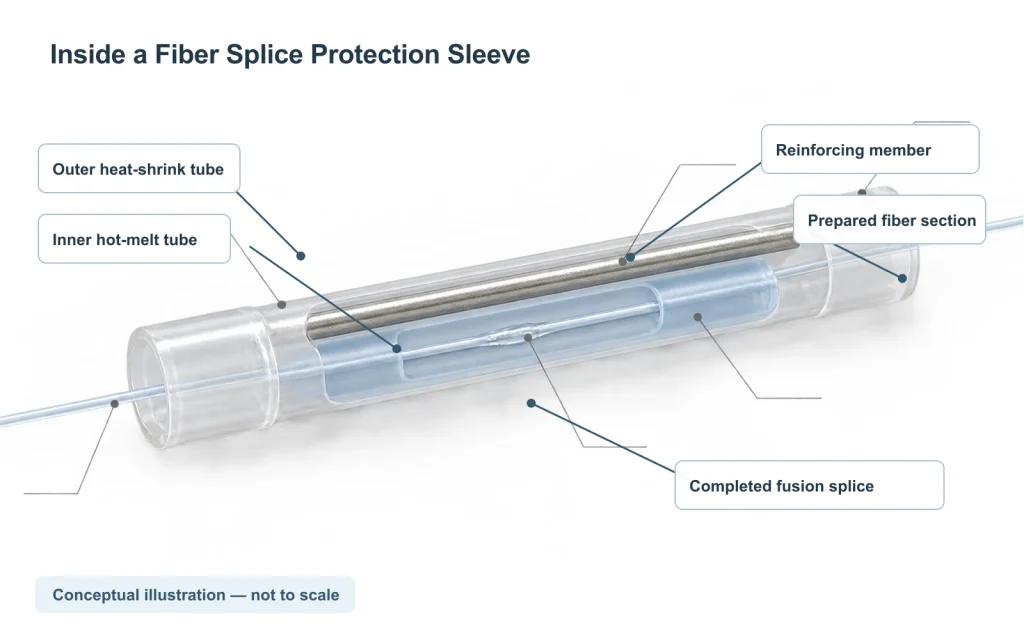
For fusion splicing you need a stripper, a precision fiber cleaver, and a fusion splicer. For field-installable LC connectors you need a stripper, a cleaver, and the crimp tool that ships with the connector. A microscope or the splicer’s camera verifies the end face.
Can I install LC connectors in the field without a fusion splicer?
Yes. Field-installable (fast) LC connectors use mechanical anchoring instead of fusion and install in about 90 seconds with a crimp tool. For best long-term reliability, fusion-spliced pigtails remain the standard for permanent links.
How long does it take to install an LC connector?
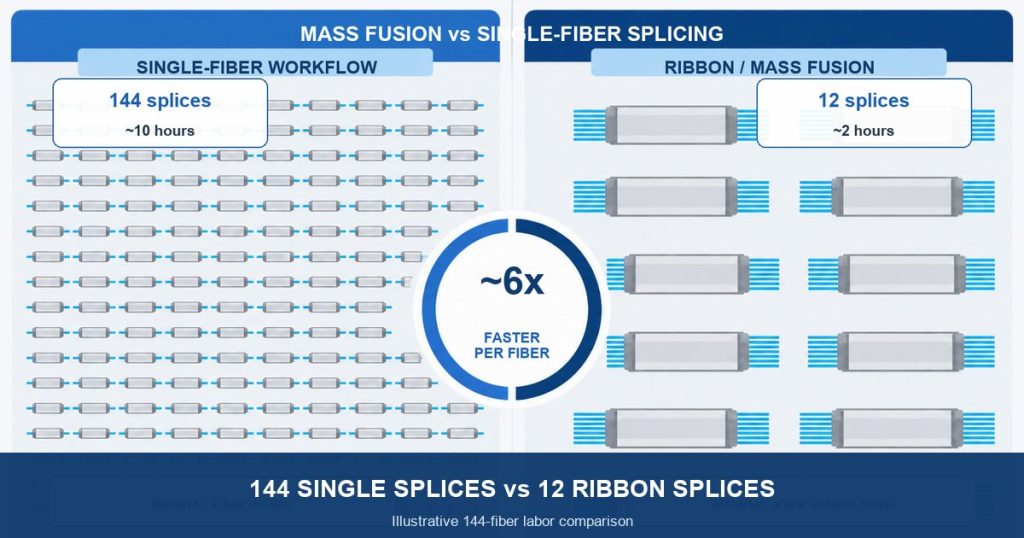
A fusion-spliced LC pigtail takes a few minutes including stripping, cleaning, and splicing. A field-installable LC connector takes about 90 seconds once the fiber is stripped and cleaned.
What is the difference between installing LC and SC connectors?
The process is the same; only the parts are smaller. The LC ferrule is 1.25 mm versus 2.5 mm on SC, so alignment and cleanliness matter more. For a full comparison, see SC vs LC fiber connectors.
Should I choose UPC or APC when installing LC connectors?
Choose UPC (blue) for most data and telecom links, and APC (green, 8-degree angle) for PON/FTTx where return loss matters. The two are not interchangeable, so match the polish type at both ends. See APC vs UPC for details.
Already terminated and need to plug in? Read how to connect LC fiber connectors in 5 steps, or browse our LC fiber connector types and selection guide.
Stock Your LC Installation: Three Keyword Branches
Match the branch to what your installation still needs — each leads to the corresponding BWNFiber product line:
- Branch 1 · Connectors and field termination: field-installable fast connectors for splicer-free termination, and the SC fiber connector the LC was designed to replace.
- Branch 2 · LC cords and assemblies: fiber optic patch cords in duplex and uniboot constructions, and fiber cable assemblies built to your length and polarity.
- Branch 3 · Tools and acceptance: fiber optic test equipment and tools — power meters, cleaners and inspection gear for the post-install check.
From the BWNFiber range, organized by branch: connectors and field termination → LC cords and assemblies → tools and acceptance. Each image links to the corresponding product page.

Terminates the LC drop on site without a fusion splicer.

The 2.5 mm push-pull connector the LC halves in size.

Duplex LC in one jacket for high-density patching.

Duplex CS to LC for breakout panels and switch ports.

Hardened SC/LC assembly for outdoor runs into the enclosure.

Verifies insertion loss after every termination.